
eSIM for IoT Devices: Global Connectivity Without Boundaries
Empower your IoT devices with flexible, secure, and future-proof connectivity built on the latest GSMA eSIM standards – SGP.02, SGP.22, and SGP.32.
eSIM Multi-Network Roaming Connectivity
M2M Data Connect offers seamless and affordable IoT connectivity through its multi-network eSIM. Experience unparalleled global reach, thanks to our strategic partnerships with top-tier carriers worldwide. Our intuitive IoT eSIM management platform, real-time monitoring, and flexible data plans give you total control, transparency, and operational efficiency.
Table of Contents
What Is an eSIM?
An eSIM (embedded SIM) is a programmable SIM chip built directly into your IoT device. It replaces the need for a removable plastic SIM card and allows remote activation, configuration, and switching between mobile networks without physical access.
For businesses deploying IoT devices across multiple countries or networks, eSIM technology delivers greater flexibility, faster scaling, and simplified device management.
Benefits of eSIM technology:
No physical SIM cards or replacements required
Remote SIM provisioning via secure cloud platforms
Seamless network switching between global operators
Smaller form factor and improved device durability
Reduced logistics and lower carbon footprint

Understanding eSIM Standards: SGP.02, SGP.22, and SGP.32
The GSMA defines three main specifications for eSIM technology: SGP.02, SGP.22, and SGP.32. Each is designed for specific types of devices and use cases, ranging from industrial IoT to consumer smartphones.
| Feature | SGP.02 (M2M) | SGP.22 (Consumer) | SGP.32 (IoT) |
|---|---|---|---|
| Primary Use | Industrial M2M devices such as smart meters and automotive systems | Smartphones, tablets, and wearable devices | IoT devices, routers, sensors, and asset trackers |
| Management Model | Operator-controlled via SM-DP and SM-SR servers | User-controlled via mobile OS or app interface | Enterprise or OEM-controlled via secure cloud portal |
| Provisioning Method | Complex server-based remote provisioning | QR code or mobile app activation | Automated remote SIM provisioning (RSP) for IoT |
| Local Roaming Compliance | Limited support | Moderate compliance via consumer profiles | Full compliance with local roaming regulations |
| Scalability | Low, manual provisioning required | Medium, user-initiated activation | High, cloud-managed and automated at scale |
| Lifecycle | 10+ years (industrial environments) | 2–3 years (consumer devices) | 10+ years (IoT deployments) |
| Security | High, closed operator ecosystem | Moderate, consumer-grade security | High, GSMA-compliant IoT-grade encryption |
| Flexibility | Limited – single operator per device | Moderate – user can switch operators | Full – multiple profiles, provider-agnostic |
SGP.02 was designed for early machine-to-machine (M2M) applications, where devices such as smart meters, telematics units, and industrial gateways needed to be provisioned remotely but had no user interface.
It provides a secure, operator-managed framework for updating SIM profiles through dedicated servers (SM-DP and SM-SR). While reliable, SGP.02 requires more complex infrastructure and is less flexible for large-scale IoT operations today.
SGP.22 introduced eSIM to consumer devices like smartphones and wearables. It made it possible for users to activate profiles using QR codes or apps, eliminating the need for physical SIM swaps.
While SGP.22 is user-friendly, it’s not always ideal for IoT because it relies on human interaction and mobile operating systems. Industrial and unattended devices typically require remote, automated provisioning that does not depend on a screen or app.
The SGP.32 standard is the newest and most advanced eSIM specification from GSMA, specifically designed for IoT. It merges the simplicity of consumer eSIM management with the robustness and automation of M2M eSIM provisioning.
Key features of SGP.32:
Full remote SIM provisioning (RSP) for IoT devices
Easy integration for device manufacturers and enterprises
Secure, automated onboarding through cloud platforms
Compliance with global and local roaming regulations
Multi-profile support for backup and failover connections
Improved efficiency for large-scale IoT deployments
M2M Data Connect Products
- FREE UK DELIVERY ON SIM ORDERS OVER £50
- UNBEATABLE BULK PRICE SAVINGS
- ONLINE SUPPORT 24/7
Need help, information, or want to order?
Real-World Example: Teltonika eSIM Bootstrap
A great example of how eSIM simplifies IoT deployment comes from Teltonika Networks. Their new eSIM Bootstrap solution enables routers to connect automatically without needing manual provisioning. Devices ship pre-configured for immediate connectivity, making large-scale rollouts faster and more reliable.
Read more about this innovation on Teltonika’s official website:
https://www.teltonika-networks.com/newsroom/esim-bootstrap%3A-out-of-the-box-connectivity-for-teltonika-esim-routers-
M2M Data Connect eSIM Solutions
M2M Data Connect provides multi-network eSIMs that connect to over 600 networks in 180+ countries. Our platform enables businesses to manage IoT connectivity from a single dashboard, with full visibility and control over every device in real time.
Features of our eSIM service:
Global coverage across 2G, 3G, 4G LTE, and 5G
SGP.32, SGP.22, and SGP.02 compatibility
Remote provisioning via KPN’s secure portal
Flexible data plans and centralised billing
Integration with IoT platforms and APIs
Fully managed connectivity lifecycle

Built in Partnership with KPN IoT and IDEMIA
Our eSIM technology is powered by KPN IoT in collaboration with IDEMIA Secure Transactions, leaders in global connectivity and security solutions. This partnership brings the latest GSMA-certified eSIM technology to the M2M Data Connect network.
KPN IoT provides proven expertise in remote SIM provisioning, while IDEMIA ensures secure transactions and data integrity. Together, they enable M2M Data Connect to deliver a future-ready, standards-compliant eSIM solution.
Why Choose eSIM for IoT Connectivity?
eSIM technology offers tangible operational advantages for any organisation deploying connected devices at scale.
Benefits for enterprises:
Eliminate physical SIM handling and logistics
Simplify global deployments with remote provisioning
Reduce costs through centralised management
Stay compliant with local roaming rules
Improve sustainability by removing plastic SIMs
Enable zero-touch onboarding for OEMs and manufacturers
Frequently Asked Questions
SGP refers to “SIM Global Platform” – the GSMA specifications that define eSIM management and provisioning frameworks.
Yes. The SGP.32 standard supports migration from earlier SGP.02 implementations, allowing phased transitions with minimal infrastructure change.
Yes. M2M Data Connect eSIMs are compatible with 2G, 3G, 4G LTE, and 5G networks globally.
Absolutely. All eSIM profiles and remote provisioning sessions are fully encrypted and certified under GSMA security standards.
No. Each eSIM is uniquely tied to a device’s embedded chip for security and traceability, but profiles can be managed centrally.
Why choose IoT Multi Network eSIM
Global IoT data
Global M2M coverage with more than 600+ M2M networks worldwide.
IoT Connectivity
Multiple M2M/IoT technology options: 2G, 3G, 4G LTE-M and NB IoT connectivity.
Direct SMPP link
Send SMS to your IoT Multi Network eSIM for remote device management.
IoT Platform
Comprehensive tools and resources needed for a profitable IoT deployment.
Secure APN
Private APN for your IoT Multi Network eSIM enables SIM to SIM connectivity with specific traffic management rules.
All SIM types
Standard SIM (2FF), Micro SIM (3FF), Nano SIM (4FF), industrial SIM card and integrated SIM chip QFN8/MFF2 to SoftSIM.
Fixed Private IP
Access to the SIMs is via an IPsec VPN tunnel allowing remote site to initiate the connection. Using Corporate Firewall and Internet Gateway as the most secure solution.
IP/SEC VPN
Multi-layered security for secure two-way cellular connectivity. Along with carrier grade reliability.
Need help, information, or want to order?
Key eSIM IoT Platform Features
Unified Data Control
Unified Data Control from 150+ Carriers and connected device platforms. And over 350+APIs with existing customers to manage the entire device ecosystem.
Single Pane of Glass
View your SIMs and devices in a “single pane of glass” after easily inputting your IoT platforms and carriers. Makes things easier at a lower cost.
Lifecycle Device Management
Delivers a consistent process and user experience to manage device lifecycle - individually or in bulk. Set up automations to occur in near real-time.
Parent/Child Relationships
Unlimited Parent/Child Relationships for internal and external customers. This can also be used within a customer for business lines, geography, department.
Business Process Automation
M2M IoT Connect handles your back-office data management as well rule-based automation of business process (suspend SIM when subscription term expires).
Notifications/Anomaly Detection
Platform performs cloud-based near real-time device and usage anomaly detection daily or immediately via text or email, depending on the rules you establish.
Rating and Mediation
Customer billing plans can be decoupled from carrier invoices & rate plans - enabling revenue maximization. R&M creates the data to support integration with customer ERP or billing engine.
Rate Plan Optimization
Manage costs by revealing data, SMS, and roaming charges. View monthly costs in total and trended over time. Rate Plan Optimization reduces cost with usage-based rate plan optimization.
Reporting/Statistics/Analytics
Utilizes the power of the Azure tools to transform data into insights; visualize historic data; and define patterns and trends with predictive capabilities.
Need help, information, or want to order?

 Quick View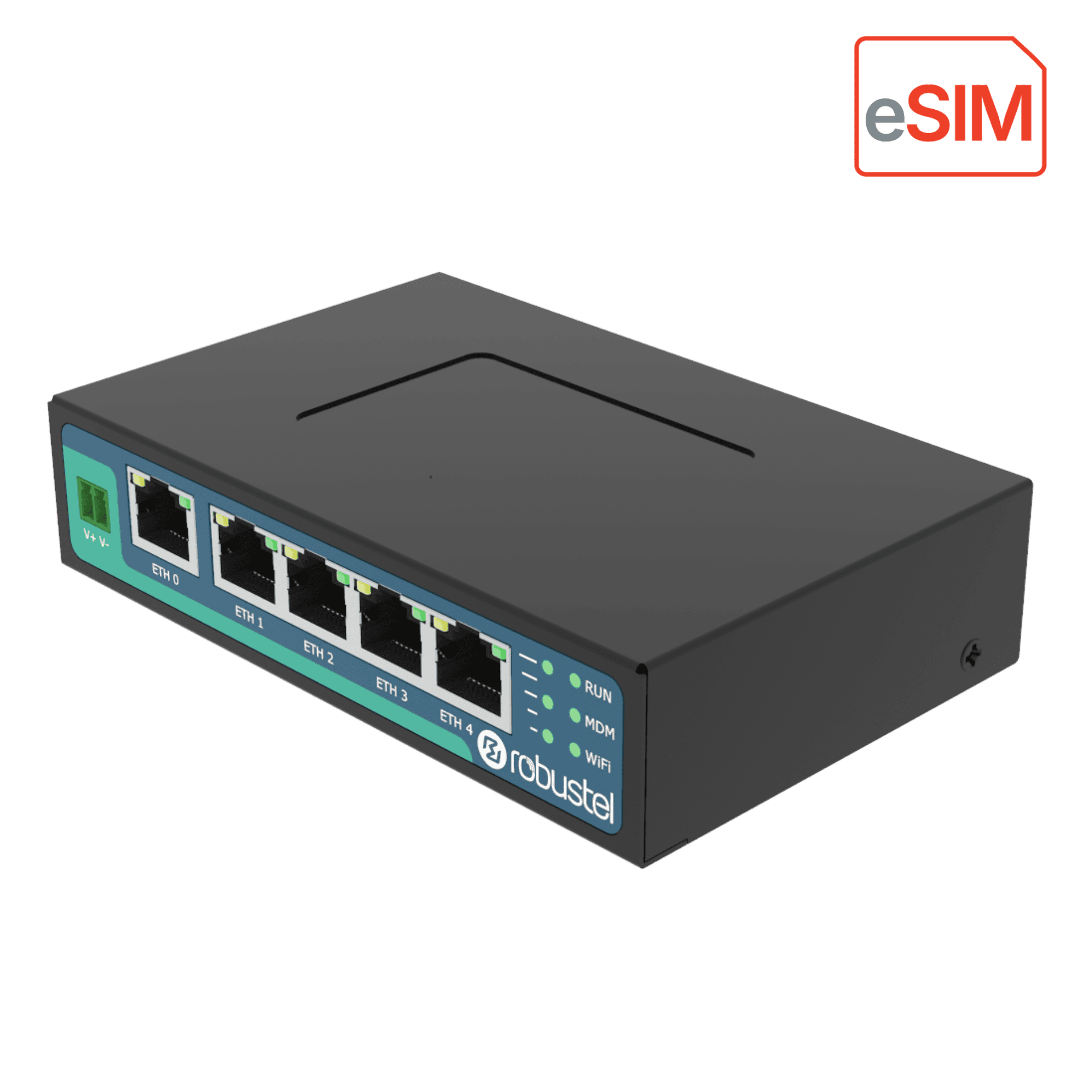
 Quick View
 Quick View
 Quick View
 Quick View


Latest News
The Latest IoT Resources

eSIMs the Missing Link in the Internet of Things
eSIMs are already rapidly gaining traction within the Internet of Things industry. For instance, they are creating new opportunities for mobile network operators and manufacturers of

Fixed IP SIM Cards with public IP address assignments
Fixed IP SIM Cards with public IP address assignments enabling 4G mobile broadband connections that are fixed. Our 4G Fixed IP SIM Cards with public

What is a private APN network
A private APN (Access Point Name) routes mobile data traffic from mobile devices directly into organisations’ corporate data networks. As a result, the M2M devices
Take the next step
Speak to an Expert
"*" indicates required fields

Get a call back
0161 660 2492
Contact us