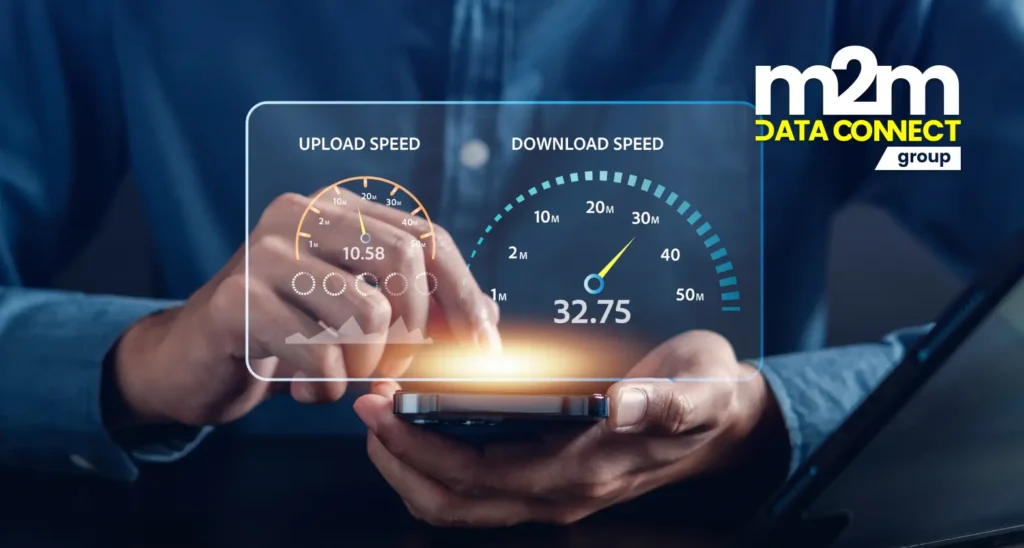
Strong signal doesn’t always mean fast data — and fast data doesn’t always mean a strong signal. Signal strength and bandwidth are two very different parts of mobile connectivity, and understanding the gap between them is essential for anyone deploying IoT, mobile services, or smart infrastructure.
Most people assume that “full bars” on a phone or IoT device means great performance. But in reality, signal strength and network bandwidth are two separate forces that shape your mobile experience and they don’t always move together.
Understanding the difference is crucial for businesses deploying IoT devices, mobility solutions, or anything that relies on consistent mobile connectivity.
What Is Network Signal Strength?
Signal strength measures how well your device can “hear” the nearest cell tower. It’s influenced by:
- Distance from the mast
- Buildings, trees, and terrain
- Indoor vs outdoor location
- Device antenna quality
Signal strength determines whether you can connect at all. Weak signal often leads to:
- Dropped calls
- Failed data sessions
- Unreliable IoT device behaviour
Research shows that signal strength varies dramatically even within the same postcode due to local obstacles and tower placement.
What Is Network Bandwidth?
Bandwidth is the capacity of the network to carry data — essentially, how much “lane space” is available for traffic.
It’s affected by:
- Network technology (4G, 5G, 5G SA)
- How many users are connected
- Spectrum allocation
- Network congestion
Ofcom’s latest mobile performance data highlights how bandwidth impacts real‑world experiences like video streaming, latency, and data success rates.
Even with strong signal, bandwidth can be low if:
- The network is congested
- The mast is overloaded
- You’re on an older technology layer (e.g., 3G/4G instead of 5G)
Signal Strength vs Bandwidth: Key Differences
Why This Matters for Mobile & IoT Deployments
1. Strong signal doesn’t guarantee fast speeds
A device may show full bars but still struggle with data because the network is congested common in cities, stadiums, and busy transport hubs.
2. Weak signal can break mission‑critical services
IoT devices in rural or indoor environments often fail not because of bandwidth, but because they simply can’t maintain a stable connection.
Coverage varies widely across the UK, even within the same area, making signal strength a critical planning factor.
3. Bandwidth determines performance for data‑heavy applications
5G SA networks deliver lower latency and higher throughput, but only when bandwidth is available — something Ofcom’s performance data highlights clearly.
4. IoT devices behave differently from smartphones
Many IoT devices:
- Use low‑power radios
- Operate in fixed locations
- Rely on consistent, not fast, connectivity
For them, signal strength is often more important than raw bandwidth.
5. Choosing the right SIM type matters
Non‑steered, multi‑network SIMs ensure devices connect to the strongest available signal essential when signal strength varies between networks.
Final Thoughts
Signal strength determines whether you can connect. Bandwidth determines how well that connection performs.
Both matter — but for different reasons.
For mobile users, the difference explains why you can have full bars but slow speeds. For IoT deployments, it can be the difference between a device that works flawlessly and one that fails silently.
Understanding both helps businesses design more resilient, predictable, and scalable connectivity strategies.